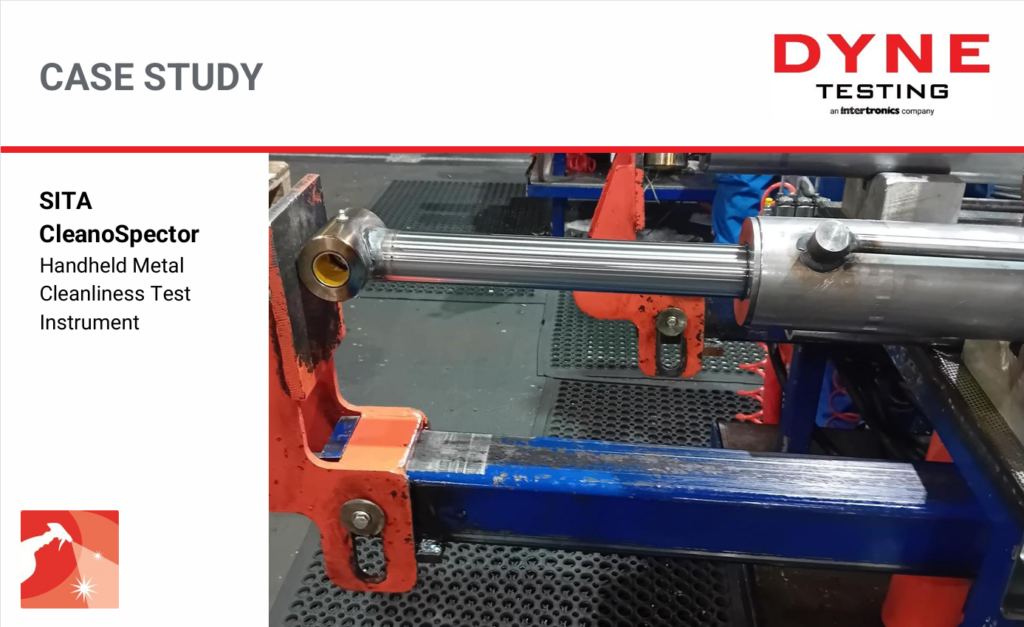
Case study: When you measure cleanliness, you change the economics
In many manufacturing environments, cleaning processes are managed conservatively because cleanliness is hard to verify. Cleaning fluids are changed on a fixed schedule. Maintenance is brought forward “just in case”. It feels prudent. But it is rarely measured. Our latest case study with Burnside Hydracyl shows what happened when a manufacturer replaced assumption with quantitative […]
Read More
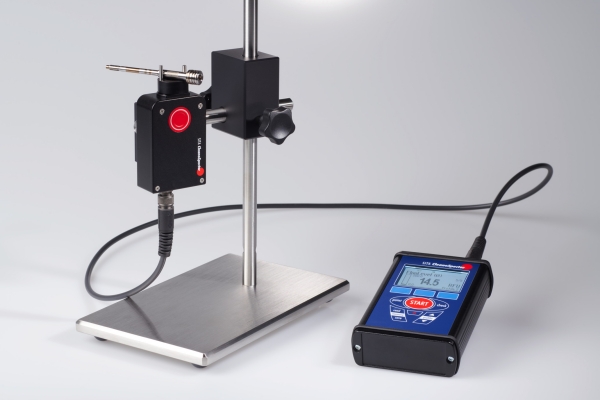
How does the SITA CleanoSpector work in practice?
The video shows how the handheld device SITA CleanoSpector is used to quickly and easily check surface cleanliness — highlighting its simple handling and rapid measurement capabilities. If you have already seen it in action, this three minute video is still worth a look because it shows what real operators care about: how quickly the […]
Read More
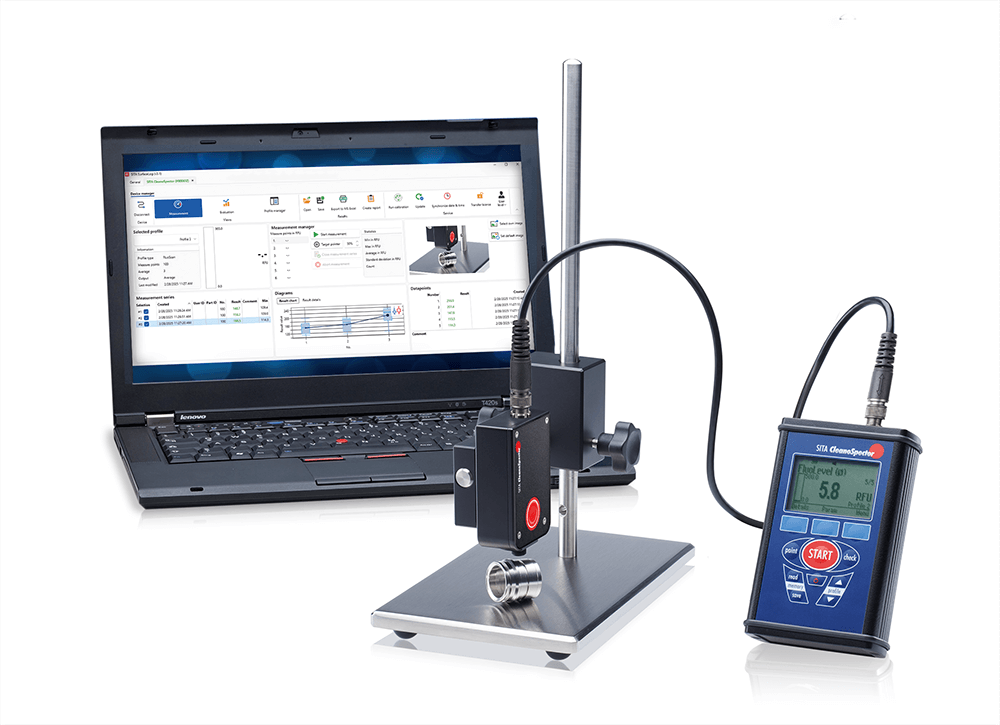
Why service matters for your CleanoSpector
Manufacturers rely on the CleanoSpector because it gives quick, objective readings of surface cleanliness in RFUs (Relative Fluorescence Units). We are seeing increasing incidences of an RFU number being specified as an inspection or acceptance demand on drawings and specifications. It is an important part of quality control. If the CleanoSpector drifts out of tolerance, […]
Read More

Case study: How we ensure clean is clean
Powdertech Surface Science, a leading aluminium powder coating and surface treatment specialist, needed a simple, reliable way to assess surface cleanliness on metal substrates to support their high-performance coating and bonding. They turned to the SITA CleanoSpector, which now plays a key role in their QC process — helping validate cleanliness, reduce contamination risks, and […]
Read More
White Paper: The Importance of Measuring Organic Contamination Prior to Welding
Measuring and controlling organic contamination prior to welding is essential for producing defect-free, high-quality welds. The presence of organic contaminants can lead to serious weld defects, including porosity and poor mechanical properties such as cracking. By employing proper testing and cleaning techniques, manufacturers can improve weld integrity, enhance product reliability, and extend the lifespan of […]
Read More
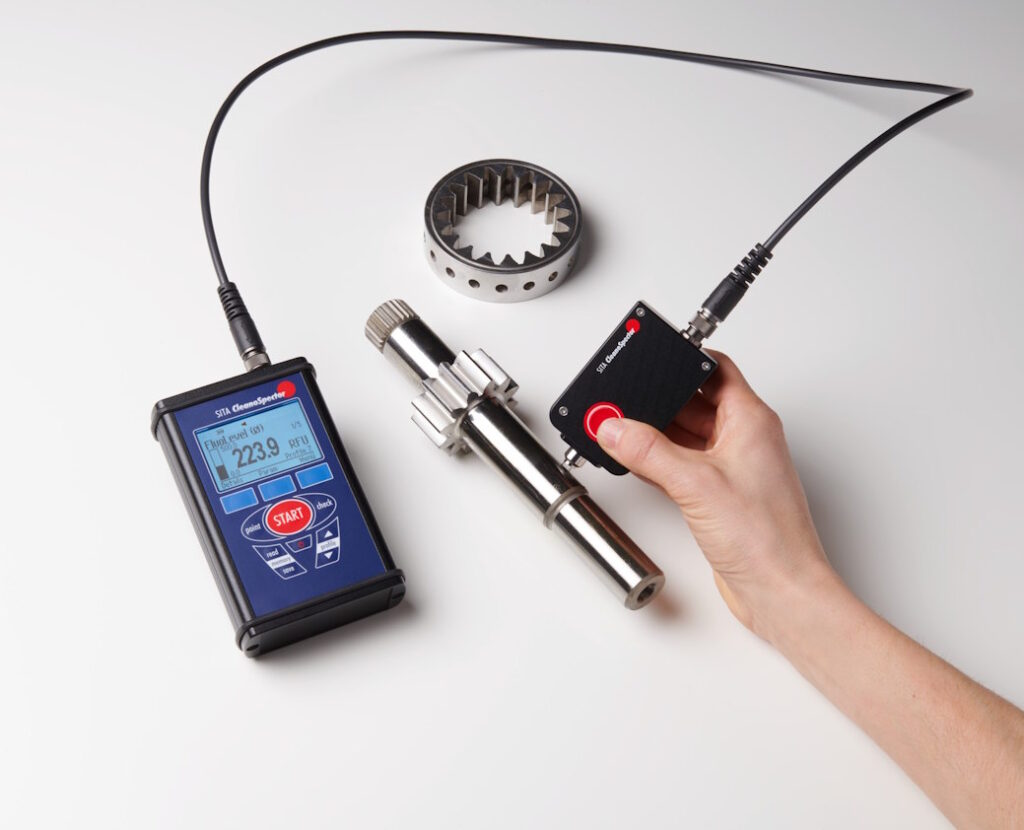
What are Relative Fluorescence Units or RFU?
Measuring cleanliness is like measuring silence – you can’t. But you can measure noise. In the same way, you can’t measure cleanliness, but you can measure contamination. There are several ways of measuring or assessing contamination on metal, including contact angle measurement, various forms of spectroscopy (FTIR, XPS) and gravimetric analysis, which for this purpose involves […]
Read More
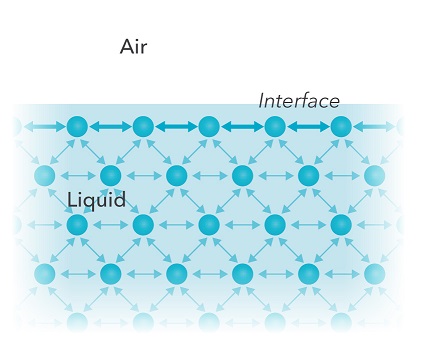
Getting below the surface of surface science
Since Dyne Testing Ltd was acquired by Intertronics, our interest in – and understanding of – surface science has expanded past surface measurement to adhesion, adhesive performance and surface treatment. We’ve combined all of our aspects on surface treatment, surface measurement, and surface preparation into one place, alongside some relevant products. Have a look at […]
Read More

White Paper: Detection of Organic Contamination on Surfaces by Fluorescence Measurement
We have just published a White Paper, entitled Detection of Organic Contamination on Surfaces by Fluorescence Measurement. Written by colleagues from SITA Messtechnik GmbH, André Lohse and Tilo Zachmann, it is based on abstract to a conference speech at the 12th European Conference for Non-Destructive Testing in Gothenburg, Sweden, June 2018. The article describes how […]
Read More

What is ISO 8502-6?
ISO 8502 is an international standard that specifies a method for extracting water-soluble contaminants from steel surfaces prior to the application of paints, coatings or adhesives. This standard is titled Preparation of steel substrates before application of paints and related products — Tests for the assessment of surface cleanliness. Part 6 of the standard outlines […]
Read More
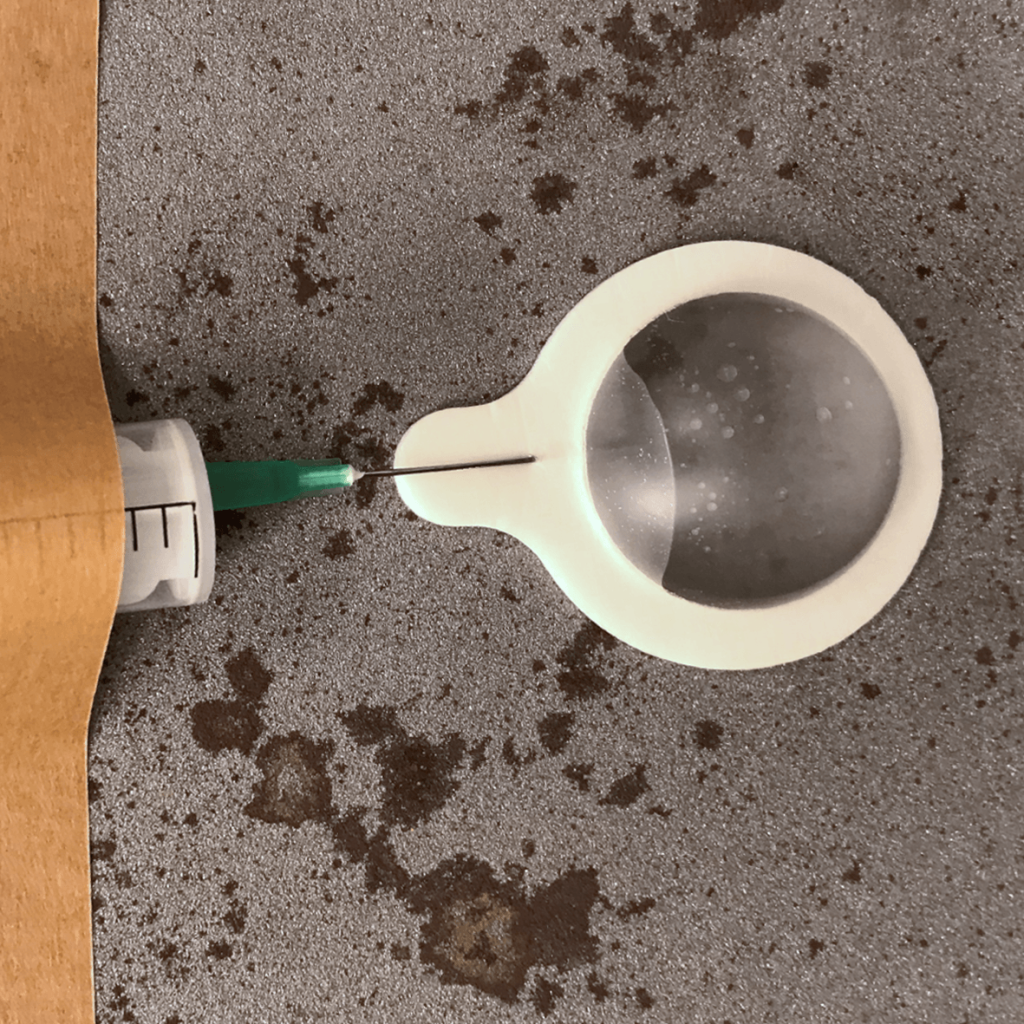
What is the Bresle method?
The Bresle method is a standardised procedure (in accordance with ISO 8502-6 Extraction of soluble contaminants for analysis — The Bresle method and ISO 8502-9 Field method for the conductometric determination of water-soluble salts) for determining the concentration of soluble salts on metal surfaces prior to a bonding or coating application, such as using adhesives […]
Read More
Hand-held test instrument for metal cleanliness
For certain processes, maintaining clean metal parts before moving to the next manufacturing stage is crucial, but how can you be certain your surfaces are completely free of contaminants? Dyne Testing, presents the CleanoSpector, an instrument that provides contact-free cleanliness inspection and aids quality assurance of industrial cleaning processes. The CleanoSpector measures organic contamination such […]
Read More
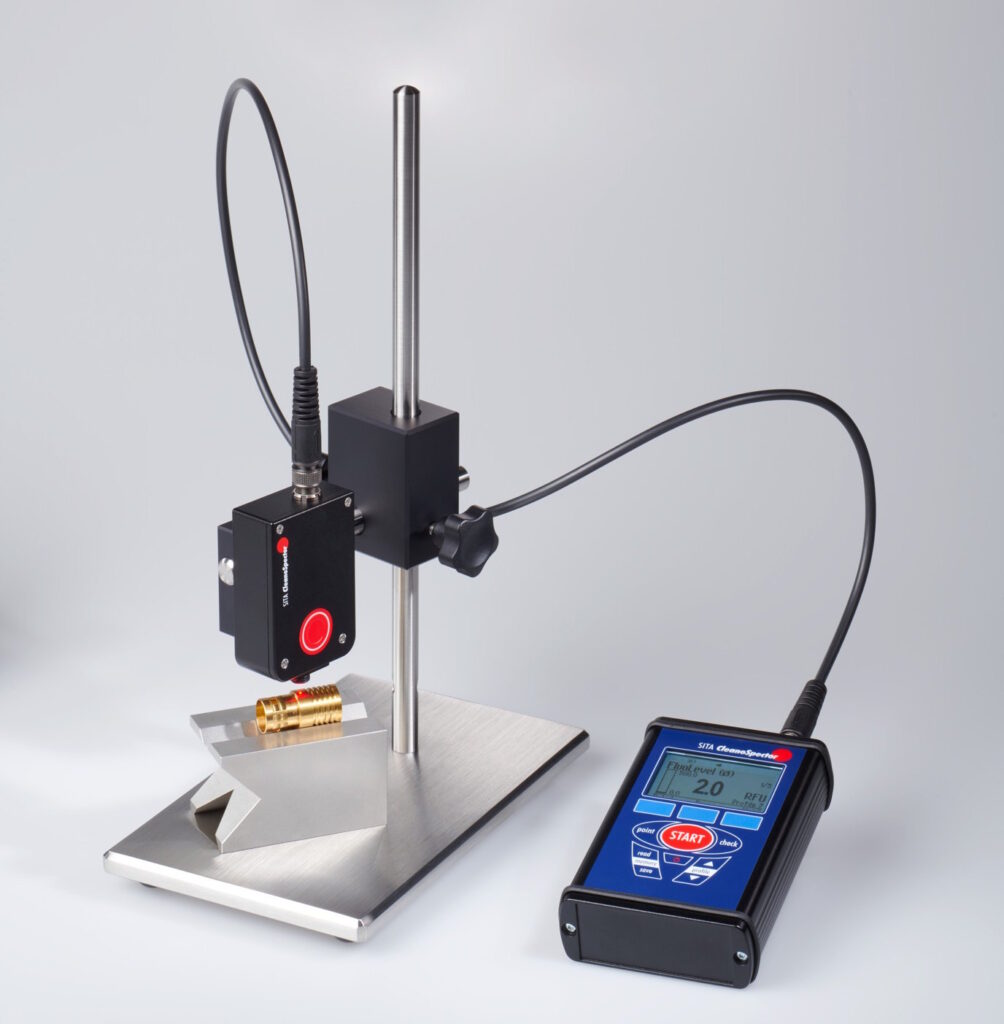
Simple cleanliness inspection of metal parts in medical device manufacturing
Medical device manufacturing has a well deserved reputation for rigorous manufacturing and process control. There is no compromise on quality when people’s lives are at stake. This focus on quality control and assessment certainly applies to medical devices made from metal — for example, implants, replacement joints, endoscopes and cannulas, all of which are inserted […]
Read More
Optimising Industrial Bath Lifetime
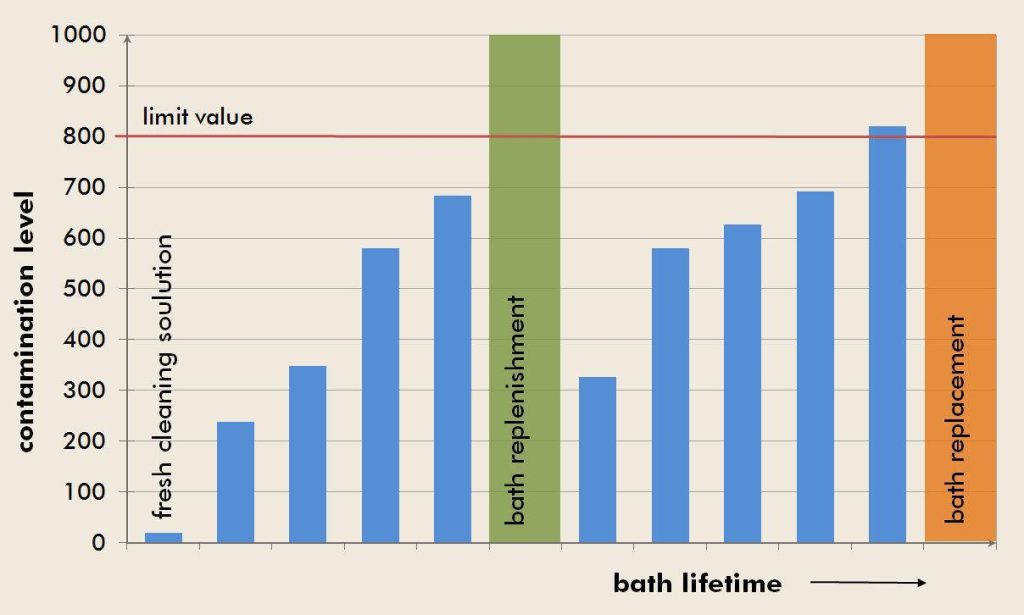
What is the best cleaning power worth if the cleaning bath contains oil that re-contaminates the parts? By simply measuring the contamination level process, reliability can be increased as well as improving cost-effectiveness. An increasing level of contamination caused by grease or oil left by machined parts in cleaning baths will cause a decrease in […]
Read More
Monitoring the Concentration of Cleaning Agents
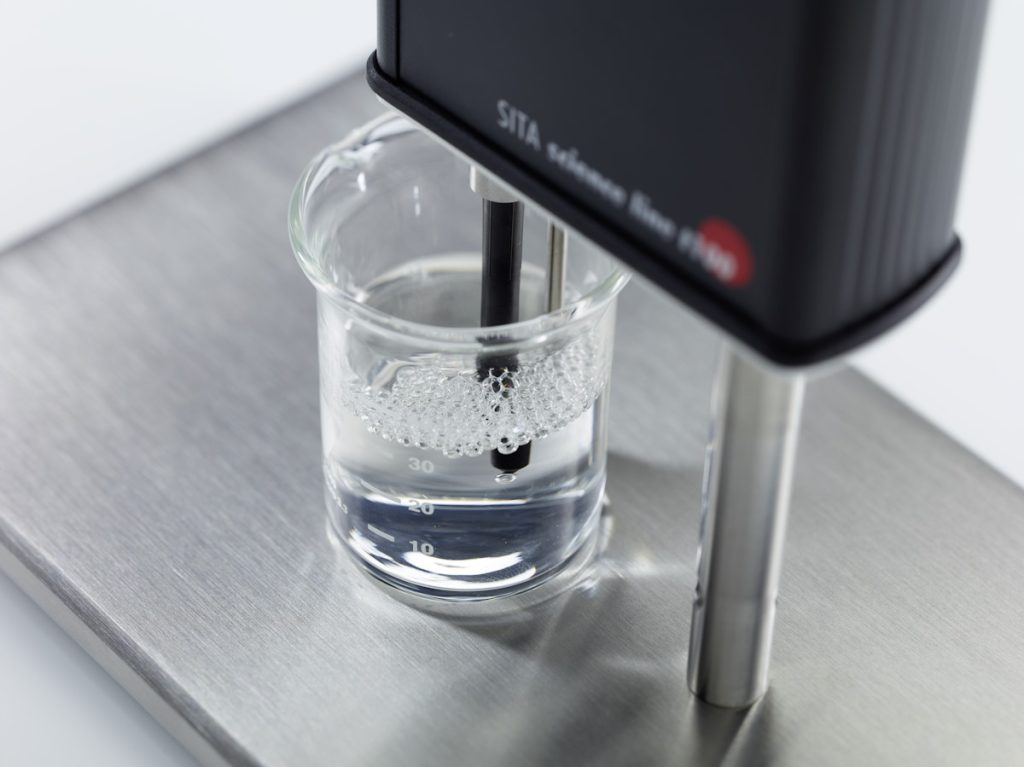
Water based cleaning agents have an optimal effect when their components are regularly monitored, carefully dosed and their concentrations are kept stable. This assures not only stable parts cleanliness but also increases the economic efficiency of cleaning processes. Water based cleaning agents consist of the components builder and surfactant either combined as a full cleaner […]
Read More
Metal Cleanliness Test Instrument Supplied to Ilmor Engineering Ltd
Dyne Testing Ltd supply high performance F1 and Indy car race engine designer and manufacturer Ilmor Engineering Ltd with the revolutionary ‘CleanoSpector’ surface cleanliness measurement instrument. The NEW CleanoSpector will help Ilmor to further improve their already high quality standards. Ilmor wanted to optimise their cleaning processes and ensure that they have the quality assurance […]
Read More
Dyne Testing Introduce the SITA Range of Cleanliness and Contamination Test Instruments
Dyne Testing has recently been appointed the UK & Ireland distributor for SITA Messtechnik GmbH who manufacture mobile and robust measuring instruments for process and laboratory applications. The products are aimed at optimising parts cleanliness, reducing costs of chemicals, waste water and minimising the amount of downtime in the production plant. Included in the range is […]
Read More
The Soluble Salt Meter – An Alternative Measure for Testing Surface Contamination
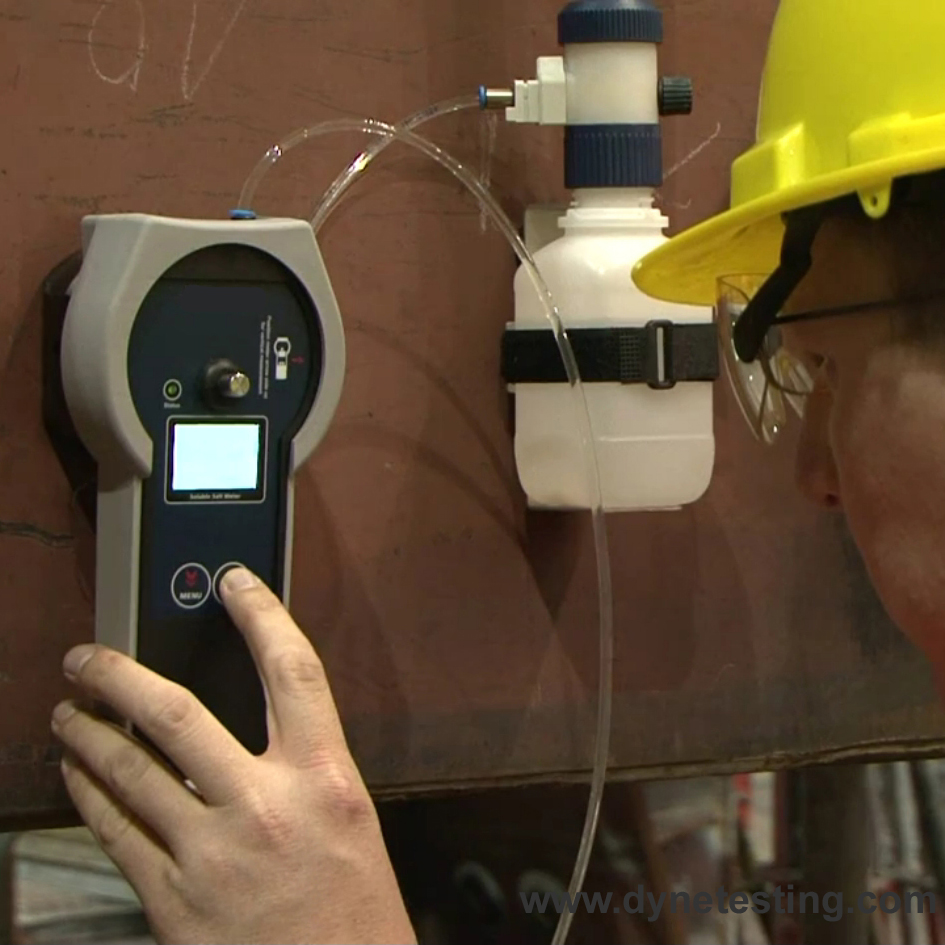
A new inspection tool has been developed as an alternative to the Bresle test method for soluble salt determination. The Soluble Salt Meter (SSM) test has a very short cycle time of only 1 minute and duplicates the Bresle process, except that measurements are automated and there are no consumables. The hand held design provides a self-contained, easily transportable […]
Read More